Blog

  • Okay but have you seen the Wrangler pet line??

    I stumbled across this and genuinely could not stop adding things to my cart.

    *This post contains affiliate links. I may earn a commission on purchases made through these links at no extra cost to you. All opinions are my own!*

    So I was just casually browsing the other day, minding my own business, when I came across the Wrangler pet collection — and honestly? I immediately texted three of my dog mom friends.

    Like, I didn’t know I needed Wrangler for my dog but here we are. The whole line has this rugged, classic look that somehow makes every dog walk feel a little more put-together. And the fact that there’s 15% off right now on multiple categories?? I had to share.

    Whether you’re shopping for your own pup or looking for a gift that’s actually thoughtful (not just another squeaky bone), this lineup has genuinely impressed me. Here’s everything I’m loving:

    🦮

    The leashes & harnesses are chef’s kiss

    Walk time just got a serious upgrade. I know that sounds dramatic but the Wrangler leashes and harnesses have this sturdy, well-made feel that you can just tell from the moment you pick them up. My dog is a puller (working on it, don’t come for me) and I need something that actually holds up — this is it.

    The ergonomic design means the pup stays comfy and secure without feeling restricted, and honestly the Wrangler branding just looks so good. It’s the kind of thing where you show up to the dog park and people ask where you got it.

    Your pup deserves the good stuff.Shop Leashes & Harnesses →

    The accessories though — too cute

    Okay this is where I fully lost it. Bandanas. Tote bags. Caps. All with that classic Wrangler aesthetic and they are SO giftable. If you’ve got a dog birthday, a new puppy friend, or just someone in your life who is absolutely feral about their pet (hi, it’s me), this is the move.

    The materials are lightweight and easy to clean — which, if you have a dog, you know is a non-negotiable. Nothing worse than a cute bandana that’s impossible to wash. These are made for real life with real messy pets.

    Iconic Wrangler style your pup (and you!) will love.Shop Accessories →

    A crate that actually looks good in your home

    Okay real talk — crates are one of those things that feel like a necessary eyesore. You need one, but they’re not exactly home decor goals. Until now, apparently! The Wrangler Pet crates covers have this rugged, iconic western look that doesn’t make your living room feel like a kennel.

    Versatile and stylish? In this economy? Wrangler Pet Crates & Crate Covers

    “A crate that looks good in your home AND your dog loves it? That’s the dream and Wrangler is out here making it real.”

    And the toys?? My dog is obsessed

    Last but definitely not least — the toys. Chew toys, rope toys, tennis ball sets… all built with that same Wrangler durability so they actually last more than three days (dog parents, you know exactly what I mean). My dog is what I’d politely call a “destructive chewer” and she met her match.

    The toys are safe, pet-friendly, and designed to keep dogs engaged — mentally and physically. And they look adorable in the toy basket which is an underrated quality. These would make such a good gift too, especially for new puppy parents who are still in the “buying all the things” phase.

    Keep your pup happy.Shop Dog Toys →

    So there you have it — the Wrangler pet collection in all its rugged, adorable glory. I genuinely didn’t expect to fall this hard for a pet product line but here we are. The 15% off across all these categories makes it the perfect time to stock up or grab something for a dog-loving friend.

    If you pick anything up, let me know! Drop a comment or tag me — I live for seeing other people’s dogs in cute gear. 🐶

    Until next time,

    Jessica

    *Affiliate links are included above. I earn a small commission when you shop through my links — it helps keep this blog going and I only ever share things I genuinely love. Thank you for your support!*

  • Shedding Season Is Here — Here’s How I’m Surviving It (And What’s Actually Helping My Dogs’ Coats)

    If you have dogs, you already know. That moment in spring when you run your hand down their back and a small animal’s worth of fur comes with it. Shedding season is officially upon us and if you’re not prepared, your floors, your furniture, and your sanity are all at risk.

    I’ve been through enough shedding seasons to know that you cannot brush or vacuum your way out of it alone. The real game changer happens from the inside out — and that’s where fish oil comes in.


    Why Fish Oil Is the Secret Weapon Nobody Talks About Enough

    I started adding omega-3 fish oil to my dogs’ routine after noticing their coats looked dull and the shedding felt excessive even for their breed. Within a few weeks of consistent use I noticed their coats were shinier, softer, and the loose fur situation genuinely improved.

    Here’s why it works — omega-3 fatty acids support healthy skin from the inside, which means the hair follicles are healthier, the coat is stronger, and there’s less of that dry flaky shedding that ends up on absolutely everything you own.

    The one I’ve been using lately is the Zesty Paws Wild Alaskan Omega-3 Blend Pollock + Salmon Oil and it’s become a non-negotiable part of our daily routine. My dogs get it drizzled right over their food every morning — they think it’s a treat, I think it’s the reason their coats have looked so good heading into shedding season. Win-win.


    My Shedding Season Survival Tips

    1. Start fish oil before shedding peaks Don’t wait until fur is flying everywhere. Adding omega-3s to your dog’s routine before peak shedding season means their skin and coat are already in good shape when the heavy shed hits.

    2. Brush outside every single day during peak season This is the one habit that makes the biggest difference. Daily brushing removes loose fur before it ends up on your floors. Take it outside and let the birds use it for nests — seriously, they love it.

    3. Invest in a deshedding tool that matches your breed A regular brush won’t cut it for heavy shedders. An undercoat rake or deshedding brush pulls from deeper in the coat where the bulk of the loose fur actually lives.

    4. Don’t skip baths during shedding season A good bath loosens dead fur and makes brushing way more effective afterward. Use a moisturizing shampoo to support skin health and follow up with a brush-out while the coat is almost dry.

    5. Keep your robot vacuum running daily Shedding season is not the time to vacuum once a week. Daily passes keep the fur from building up into tumbleweeds and makes the whole situation feel way more manageable.

    6. Stay consistent with supplements Fish oil isn’t a one-and-done fix — it works best when it’s part of a consistent daily routine. I add it to my dogs’ food every single morning without fail. Consistency is everything.


    The Bottom Line

    Shedding season doesn’t have to mean your house looks like a fur explosion for three months straight. A solid grooming routine, the right tools, and supporting your dog’s coat health from the inside with omega-3s makes a genuinely noticeable difference.

    If you haven’t tried adding fish oil to your dog’s daily routine, shedding season is honestly the perfect time to start. Your floors will thank you.


    I use and recommend the Zesty Paws Wild Alaskan Omega-3 Blend Pollock + Salmon Oil as part of my dogs’ everyday wellness routine. You can find it on Amazon .

    P.S. — I keep my full Amazon dog supply list updated with everything I recommend. If you found this post helpful, that list is your next stop. →Amazon Pet Must Haves

    This post contains affiliate links as part of the Amazon Creator Connections program. I may earn a commission if you purchase through my link at no extra cost to you. All opinions are my own and based on my personal experience with my dogs.

  • Leaving Your Dog Home for Vacation? Here’s How to Make It Easier on Both of You

    Because the guilt is real — but it doesn’t have to be.


    We’ve all been there. Suitcase open on the bed, dog sitting right next to it giving you the look. Those big eyes. That tilted head. The slow, dramatic sigh.

    Leaving your dog when you go on vacation is genuinely one of the hardest parts of being a pet parent. And the stress? It runs both ways — you spend half your trip worrying about them, and they spend half their time wondering where on earth you went.

    The good news? With the right preparation, the right tools, and a little planning, you can make the whole experience so much smoother — for your dog and for your own peace of mind.

    Let’s talk about it.


    Why Vacation Stress Hits Dogs So Hard

    Dogs are creatures of routine. They know when you wake up, when you feed them, when walkies happen, and when it’s cuddle time on the couch. When that routine suddenly disappears — and you disappear with it — it can trigger real anxiety.

    Common signs of separation stress in dogs include:

    • Excessive barking or whining
    • Destructive behavior (hello, chewed couch cushions)
    • Loss of appetite
    • Accidents in the house despite being house-trained
    • Lethargy or depression

    And here’s the thing — a stressed dog isn’t a bad dog. They’re just a dog who misses their person. Understanding that is the first step to helping them cope.


    The Guilt Is Real (And You’re Not Alone)

    Let’s just say it out loud: dog mom guilt is a very real thing.

    You book the trip, you get excited, and then approximately 48 hours before you leave you start spiraling. Will they eat? Will they think I abandoned them? What if they cry all night?

    The anxiety you feel leaving your dog is completely normal — it means you’re a good pet parent. But it also means you need a solid plan so you can actually enjoy your vacation instead of refreshing the pet cam every 20 minutes.

    Here’s how to build that plan.


    Step 1: Set Your Dog Up With the Right Person

    Whether you’re using a professional pet sitter, a trusted friend, or a family member — whoever is watching your dog needs to know everything.

    Not just “feed her twice a day and take her for walks.” Everything.

    Her quirks. Her fears. What she does when she’s anxious. Which neighbor’s dog she doesn’t like. What time she goes to bed. Whether she sleeps with a nightlight. The works.

    That’s exactly why I created a free Pet Sitter Information Sheet you can download, print, and fill out before you leave. It covers everything from feeding schedules and medications to emergency contacts, home access details, and behavioral notes.

    👉 Download your free Pet Sitter Information Sheet here

    Print it out, go through it with your sitter, and leave it somewhere visible. Your dog’s sitter will thank you — and so will your anxiety levels.


    Step 2: Keep Them Mentally Stimulated

    A bored dog is a stressed dog. One of the best things you can do before you leave — and instruct your sitter to continue — is keep your dog’s brain busy.

    Enter: the WOOF Pupsicle.

    This interactive enrichment toy is one of our absolute favorite finds for keeping dogs entertained, calm, and happily occupied. You fill the Pupsicle toy with the WOOF Dog Calming Pupsicle Mix, freeze it, and hand it over — your dog gets to work licking and foraging, which is one of the most naturally calming activities for dogs.

    It’s not just fun. Licking and foraging actually activates the parasympathetic nervous system in dogs — meaning it genuinely helps reduce anxiety. Science-backed treat time? Yes please.

    👉 Get the WOOF Pupsicle Interactive Toy here (affiliate link) 👉 Grab the WOOF Pupsicle Refill Mix here (affiliate link)

    Pro tip: Make a few ahead of time and leave them in the freezer with a note for your sitter. They’ll last all week and give your dog something to look forward to every day.


    Step 3: Use a Crate — But Make It a Safe Haven

    If your dog is crate-trained, this is your best friend during vacation time. A crate gives dogs a den-like space that feels theirs — safe, contained, and familiar even when the rest of the world feels off.

    The key is making sure the crate is a positive place, not a punishment. Here’s how to set it up right:

    • Add a worn item of your clothing — your scent is genuinely comforting to them
    • Include their favorite blanket or toy
    • Leave a frozen Pupsicle inside so they associate the crate with good things
    • Keep it in a quiet but social area — not isolated in a back room
    • Never use it as punishment — it should always feel like their safe place

    If your dog isn’t fully crate-trained yet, start working on it before your trip so it’s already a familiar, comfortable space by the time you leave.

    👉 Shop highly rated dog crates on Amazon here (affiliate link)


    Step 4: Keep Boundaries Consistent With the Halo Collar

    If your dog is used to boundaries at home — staying in the yard, not going beyond certain areas — those need to stay consistent while you’re away. Inconsistency is stressful for dogs, and a sitter who doesn’t know your dog’s boundaries can accidentally let things slip.

    This is where the Halo Collar is an absolute game changer.

    The Halo Collar is a GPS-based wireless fence collar that lets you create invisible boundaries for your dog — no buried wires, no physical fencing required. Your sitter doesn’t have to remember a complicated set of rules about where the dog can and can’t go. The collar handles it.

    You can monitor your dog’s location in real time from anywhere in the world — yes, including from your lounge chair on the beach — and get alerts if anything seems off. It also comes with a built-in training system developed with Cesar Millan, so it’s not just a fence, it’s a full safety solution.

    For peace of mind while you’re away? It doesn’t get much better than knowing exactly where your dog is at any given moment.

    👉 Get the Halo Wireless Dog Fence Collar here (affiliate link)


    Step 5: Create a Handoff Routine That Calms Your Dog

    How you leave matters more than you think. Dogs pick up on your energy — if you’re tearful, anxious, and making a big dramatic exit, your dog is going to feel that something is very wrong.

    Instead, try this:

    • Keep your goodbye short and calm — a quick pat, a treat, and a normal “see you later” tone
    • Do a practice run — have your sitter come over for a visit or two before you leave so your dog already knows and likes them
    • Stick to your dog’s normal schedule as long as possible — same wake-up, same feeding, same walks
    • Brief your sitter thoroughly — use the free info sheet to make sure nothing gets missed

    The calmer your energy at drop-off, the calmer your dog will be once you’re gone.


    The Honest Truth About Dog Vacation Guilt

    Here’s what I want you to hear: leaving your dog doesn’t make you a bad pet parent. It makes you a human one.

    You deserve to take vacations. You deserve to travel, explore, and recharge. And your dog — with the right sitter, the right enrichment, a cozy crate, clear boundaries, and a whole lot of frozen Pupsicles waiting in the freezer — is going to be okay.

    More than okay. They’ll probably have a pretty great time.

    Prepare well, leave good information, use tools that work, and then let yourself enjoy your trip.

    You’ve got this. 🐾


    Quick Recap: Your Vacation Dog Prep Checklist

    P.S. — I keep my full Amazon dog supply list updated with everything I recommend. If you found this post helpful, that list is your next stop. →Amazon Pet Must Haves


    This post contains affiliate links. If you purchase through my links I may earn a small commission at no extra cost to you — thank you so much for supporting this blog! 🐾

  • Surviving Shedding Season: Tips and Tricks for Pet Owners

    If you share your home with a dog or cat, you already know the struggle — tumbleweeds of fur drifting across the floor, hair embedded in your couch, and somehow always finding a pet hair in your coffee. Shedding season is a fact of life, but with the right approach, you can manage it without losing your mind (or your vacuum cleaner).

    Why Do Pets Shed More at Certain Times of Year?

    Most dogs and cats shed heavily twice a year — typically in spring and fall. This is their natural response to changing daylight hours and temperatures. Spring shedding helps them lose their thick winter coat, while fall shedding clears out the lighter summer coat to make way for heavier winter growth. Indoor pets often shed more consistently year-round since artificial lighting disrupts their natural cycles, but you’ll still notice peaks during seasonal shifts.

    Brush More Than You Think You Need To

    The single most effective thing you can do during shedding season is brush your pet regularly — and “regularly” means more often than usual. Short-haired breeds may only need brushing every few days, but long-haired and double-coated breeds can benefit from daily sessions. The hair you collect on a brush is hair that never makes it to your furniture or floors. I LOVE this FURminator Undercoat Deshedding Brush

    Use the right tool for your pet’s coat type. Slicker brushes work well for most dogs and cats. Undercoat rakes and deshedding tools like the Furminator are excellent for double-coated breeds like Huskies, Golden Retrievers, and Maine Coons. Rubber grooming gloves are a low-stress option for cats who resist traditional brushes.

    Brush outside when possible. It sounds simple, but doing your brushing session on the porch or in the yard lets the loose fur scatter naturally instead of settling on every surface in your home.

    Don’t Skip Baths

    A good bath followed by a thorough blow-dry can release enormous amounts of loose undercoat that brushing alone won’t catch. Many professional groomers offer a “deshedding treatment” that combines a deep-conditioning shampoo with high-velocity drying — if your pet’s shedding is particularly intense, this can make a dramatic difference. Aim for a bath every four to six weeks during peak shedding season. This Shampoo is gentle and leave Thor so soft!

    Keep Up With Your Home

    Even with diligent grooming, hair will still accumulate. A few strategies make staying on top of it much easier:

    Vacuum frequently and invest in a vacuum designed for pet hair. Models with tangle-free brush rolls are especially helpful if your pet has long fur that wraps around the roller. Run your vacuum at least two to three times a week during heavy shedding periods.

    Use a rubber squeegee or damp rubber gloves to gather fur from upholstered furniture. The static and friction work better than most lint rollers for deeply embedded hair. Washable furniture covers or slipcovers are worth using on couches and chairs during peak shedding if you don’t mind the look.

    Throw your pet’s bedding in the wash weekly. It’s one of the biggest concentrations of loose fur in your home and easy to overlook. Dont Forget this, it will save your washing machine…Trust me!

    Feed for a Healthy Coat

    Excessive shedding is sometimes a sign that something’s off nutritionally. A high-quality diet rich in omega-3 and omega-6 fatty acids supports healthy skin and coat, which can reduce abnormal shedding. Fish oil supplements are a popular and vet-approved addition to a pet’s diet during shedding season. If you notice your pet’s coat looks dull, dry, or patchy alongside the shedding, it’s worth a conversation with your vet.

    Know When Shedding Is Too Much

    There’s a difference between normal seasonal shedding and excessive hair loss that signals a health problem. If you’re seeing bald patches, irritated or inflamed skin, excessive scratching or licking, or if the shedding seems severe and sudden outside of the normal seasonal windows, schedule a vet visit. Thyroid issues, allergies, parasites, and stress can all cause abnormal shedding.

    A Few Small Habits That Help a Lot

    Keep a lint roller in your car, near the front door, and at your desk. Wipe down your pet with a damp towel after outdoor play to pick up loose fur before it migrates inside. Run an air purifier with a HEPA filter to capture airborne pet dander and fine hair. And honestly — accept that some fur is just part of the deal. The more relaxed you are about it, the less overwhelming it feels.

    Shedding season doesn’t have to mean chaos. With a consistent grooming routine, the right tools, and a few smart home habits, you can keep the fur under control and enjoy your pet through even the heaviest shed.

    Save this post for later and grab whatever makes the most sense for where you’re starting. You don’t have to do all of it at once — but once you start, you’ll wish you had done it sooner. Want the full list? I rounded up every dog product I actually use and love in one place on Amazon. No fluff, just the stuff that works. → Shop my List

    -Jessica

    ThePetHair Warrior

  • My German Shepherd Escaped Twice Before I Got the Halo Collar — Here’s My Honest Review

    Disclosure: This post contains affiliate links. If you buy something through my links I may earn a small commission at no extra cost to you. I own this product and paid for it myself. All opinions are completely my own.

    Let me tell you about the specific kind of panic that comes with owning a German Shepherd.

    It is not a general anxiety. It is a very targeted, very specific fear that lives in the back of your brain every single time a door opens a little too wide or a gate latch doesn’t catch quite right. German Shepherds are smart, fast, and deeply committed to going wherever they decide they want to go. Mine is no exception.

    She has escaped twice. Once through a gate I was absolutely certain was latched. Once because a delivery driver left the front door open for approximately four seconds — which is apparently enough time for a motivated German Shepherd to make a decision and commit to it.

    Both times ended fine. Both times I aged about three years.

    After the second escape I started seriously looking at GPS collars and eventually landed on the Halo. I want to be upfront: this is not a cheap purchase. The Halo collar is a significant investment and I thought about it for a while before pulling the trigger. But I have now been using it on my Shepherd for several months and my honest take is that it is worth every single penny.

    If you have a dog who has ever made a run for it — or one who you suspect is planning to — keep reading.

    What the Halo Collar Actually Does

    The Halo collar is a GPS collar that uses an app to create invisible fences — they call them Halo Fences — that you set up from your phone. When your dog approaches a boundary you have set, the collar gives them a warning. If they cross it, there is a correction. You control the levels, you set the zones, and you can see your dog’s location in real time from anywhere.

    But here is what sets it apart from a basic GPS tracker: it is not just telling you where your dog is after they have already escaped. It is actively working to keep them inside the boundary in the first place. That is a completely different product category and honestly a completely different level of peace of mind.

    The app is genuinely good. I can see where she is, how much activity she has gotten, her location history. If she approaches a boundary I get a notification. If she somehow crosses one I know immediately exactly where she is instead of running up and down the street calling her name like a person who has completely lost control of their life.

    Setting It Up — The Honest Version

    The setup takes some time and I want to be honest about that. You do not just put it on the dog and walk away. There is a training program built into the app — developed with Cesar Millan actually, which I did not expect — that walks you through introducing the collar to your dog and teaching them what the boundaries mean.

    My Shepherd is smart so she caught on faster than I expected. But the training period is real and it matters. You cannot skip it and expect the system to work. Think of it as a few weeks of intentional work upfront for years of peace of mind on the back end.

    The collar itself is chunky — I will not pretend otherwise. It is not a dainty accessory. But it is well built, it is waterproof, and my Shepherd does not seem bothered by it at all. She forgets it is there within about five minutes of putting it on.

    The training program is genuinely good. Follow it properly and your dog will understand the boundaries faster than you expect.

    The Part That Made It Worth It For Me

    The moment I knew I had made the right call was the first time I let her out in the backyard and just… stayed inside. Did not stand at the window watching. Did not listen for the sound of the gate. Just let her out and trusted that I would know if something went wrong.

    I cannot fully explain how different that felt from the year and a half before the Halo when every single backyard session involved me either watching her the whole time or running a low grade background worry program in my head. That mental load is real and exhausting and I did not fully realize how much it was costing me until it was gone.

    She has tested the boundary exactly once since we started using it. The collar did its job. She backed up, looked at me with an expression I can only describe as mildly offended, and went back to sniffing the grass. We have not had an issue since.

    Is It Worth the Price — Real Talk

    The Halo collar is expensive. I am not going to dance around that. It is a premium product at a premium price point and it requires a subscription for full functionality.

    Here is how I think about it. One emergency vet visit if she gets hit by a car after an escape would cost more than the collar. One afternoon of driving around a neighborhood calling her name, genuinely not knowing if she is okay, has a cost that does not show up on a receipt but is very real. The collar is a one-time investment that has completely eliminated that specific category of stress from my life.

    For me — with a dog who has actually escaped, who is fast, who is smart enough to find opportunities I did not know existed — it was absolutely worth it. If you have a dog who has never shown any interest in leaving and has a fully secured yard, you might not need it. But if you have a runner, an escape artist, or just a dog who makes you nervous — this is the answer.

    You can find the Halo collar on Amazon — I will link it below. I would also recommend looking at the different subscription tiers before you buy so you know exactly what you are getting into on the ongoing cost side.

    The Short Version For Anyone Who Scrolled Here First

    German Shepherd. Two escapes. Months of low-grade background anxiety every time she was in the backyard. Got the Halo collar. Set up the boundaries. Trained her properly. Have not had a single escape attempt or close call since. Sleep better. Let her outside without standing at the window. Worth every penny and I would buy it again without hesitation.

    The Halo is not for every dog owner. But if you have a dog who keeps you up at night worrying — it is for you.

    Questions about the Halo or GPS collars in general? Drop them in the comments — I am happy to share more about my experience with it.

    — Jessica 🐾

    Halo GPS Dog Collar

    P.S. — I keep my full Amazon dog supply list updated with everything I recommend. If you found this post helpful, that list is your next stop. →Amazon Pet Must Haves

    This post contains affiliate links. Read my full disclosure policy here.

  • Why My House Never Smells Like Dogs (Even With Three of Them Running Around)

    Real talk on the exact products I use to keep my home smelling fresh with pets — no plug-ins, no masking smells, just what actually works.


    If you’ve ever walked into someone’s house and immediately smelled dog, you know exactly why I became borderline obsessed with keeping my home fresh. I have three dogs. They sleep on the furniture. They track in mud. They exist at maximum chaos level at all times — and yet, people walk into my house and ask what candle I’m burning.

    The answer isn’t a candle.

    It’s a whole little system I’ve built over time, mostly through trial and error and a lot of Amazon rabbit holes at midnight. I’m sharing everything below — the stuff that actually works, not just the stuff that smells like it works for about 20 minutes.


    First, Let’s Talk About Why Regular Cleaning Isn’t Enough

    Vacuuming and mopping help, obviously. But pet odor isn’t just surface-level — it gets into the air, into fabric, into the corners of rooms you forgot existed. That’s why spraying Febreze and calling it a day never really worked worked. You have to attack it from multiple angles, which sounds dramatic but honestly once you have the right tools it becomes pretty effortless.

    Here’s what I actually use:


    🤖 The Shark Voice Control Robot Vacuum

    (Because dog hair waits for no one)

    This was one of those purchases I put off forever because it felt like a luxury. It is not a luxury. It is a necessity.

    The Shark Voice Control Robot Vacuum runs on a schedule every single morning before I wake up. I come downstairs to clean floors every day without doing a single thing. I can also just tell it — out loud, like a person with a robot butler — to go clean a specific room. It connects to Alexa and Google, so it fits right into whatever smart home setup you already have.

    With dogs, hair builds up FAST. Like, embarrassingly fast. Having something that handles it automatically means it never has to get to the point where you notice it. It just quietly stays on top of it in the background.

    If you have pets and hard floors, this is probably the single most impactful thing on this list.


    🧹 The EyeVac Pro Touchless Stationary Vacuum

    (The one that sits by my back door and just… eats the mess)

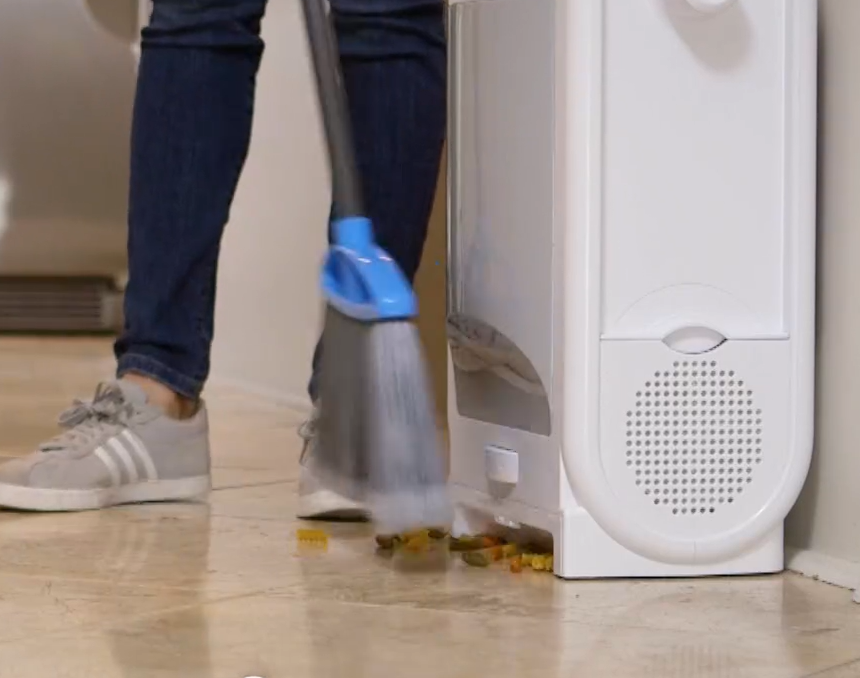
    Okay this one I feel like not enough people talk about. The EyeVac Pro is a stationary vacuum that activates automatically when you sweep toward it. No dustpan. No bending down. No watching half the pile escape while you try to angle the dustpan right.

    You just sweep. It senses the motion and sucks everything up.

    I have mine at the back door where the dogs come in, and it catches all the dirt and debris before it spreads through the house. It looks sleek enough that it doesn’t stick out weirdly — it honestly just looks like a small appliance that belongs there.

    This one is a quiet hero in my cleaning routine. Once you use it you will not understand how you ever used a dustpan.


    🫧 The Tineco Floor One Wet Dry Vac

    (Mop and vacuum in one pass — yes, really)

    The Tineco Wet Dry Vac was the product that made me feel like I finally had the floor situation handled. Before this I was vacuuming, then mopping, then waiting for floors to dry, then realizing a dog had already walked through the wet floor. It was exhausting.

    The Tineco vacuums and washes the floor at the same time. One pass. Done. It also self-cleans the brush roll so you’re not dealing with a gross tangled mess every week.

    I use this probably three or four times a week and it takes maybe 15 minutes for my whole main floor. My floors look cleaner now than they did before I had dogs, which feels slightly unhinged to say but here we are.

    Great for anyone with hard floors — tile, LVP, hardwood, all of it.


    💨 LEVOIT Air Purifiers

    (Running 24/7 and honestly I don’t know what I did without them)

    This is the backbone of why my house smells like nothing — which, when you have dogs, is the goal. The LEVOIT Air Purifier filters out pet dander, hair particles, and odors continuously. It’s not masking anything. It’s actually cleaning the air.

    I have one in the living room and one in the bedroom. They run quietly in the background — you genuinely forget they’re there. The one in the bedroom has made a noticeable difference in how stuffy the room feels, especially in winter when the windows stay closed.

    LEVOIT has a bunch of different sizes depending on your room, so it’s worth checking the square footage recommendations before you buy. I went with a mid-size for both rooms and it covers everything perfectly.

    If you do nothing else on this list, do this one. Clean air fixes so much.


    🌫️ The NORDMOND Disinfectant Fogger with Hypochlorous Acid

    (The deep clean I do when I want the house to feel truly reset)

    This one is the secret weapon. The NORDMOND Fogger is something I pull out once a week or after anything that needs a deeper clean — muddy dog situation, after guests leave, before family comes over, you know the moments.

    You fill it with hypochlorous acid solution (which sounds intense but is actually incredibly safe — it’s the same compound your body naturally produces to fight bacteria), fog the curtains, couches, and rugs and it eliminates odors and bacteria at the source. Not covers them. Eliminates them.

    The whole house takes maybe 10 minutes. Afterward it smells genuinely clean — not like a cleaning product, just like fresh air. I was skeptical the first time and then immediately ordered backup solution.

    It also works great on furniture and fabric, which is where pet smell tends to really live. Couches, dog beds, rugs — it handles all of it.


    The Full Routine (Because Context Helps)

    In case it’s helpful to see how all of this actually fits together day-to-day:

    Daily (automatic, I do nothing): The Shark Robot Vac runs every morning on a schedule.

    A few times a week: Quick pass with the Tineco when floors need a deeper clean. Sweep any debris toward the EyeVac Pro at the back door.

    Weekly: NORDMOND fog session — takes 10 minutes, I spray my fabrics, rugs and pillows with Hypochlorous Acid Spray makes the whole house smell reset.

    Always running: LEVOIT air purifiers in the main living areas. These just run. All the time. They are the unsung heroes.


    The Real Talk Part

    None of this is complicated or expensive to maintain once you have the pieces in place. The biggest shift for me was stopping the approach of reacting to pet smell and starting to prevent it with things that work in the background. The robot vac, the air purifiers, the EyeVac by the door — most of the system runs itself.

    And the fogger is there for when life gets a little extra chaotic, which with dogs is… frequently.

    If you’re a pet owner feeling like you’re fighting a losing battle with your home, I promise you it’s not a losing battle. You just need the right tools.

    Save this post for later and grab whatever makes the most sense for where you’re starting. You don’t have to do all of it at once — but once you start, you’ll wish you had done it sooner. Want the full list? I rounded up every dog product I actually use and love in one place on Amazon. No fluff, just the stuff that works. → Shop my List


    This post contains affiliate links, which means I may earn a small commission if you purchase through my links — at no extra cost to you. I only share things I genuinely use and love.

  • Clean Home Energy (Even With Dogs): Tips & Tricks to Keep Your Floors Actually Clean

    If you have dogs, you already know the struggle. You sweep. You mop. You vacuum. And thirty minutes later it looks like a fur tornado blew through your living room. Sound familiar?

    The good news? Keeping clean floors with dogs isn’t impossible — it just requires the right system. These are the tips and tools that actually work, from a fellow dog mom who has tried everything.


    1. 🐕 Invest in the Right Vacuum — and Use It Often

    Not all vacuums are created equal when it comes to pet hair. You need one specifically designed for it. Look for:

    • Strong suction that pulls hair from carpet fibers, not just the surface
    • Tangle-free brush rolls so you’re not constantly cutting hair off the roller
    • HEPA filtration to trap dander and allergens (game changer for allergies)
    • Cordless or robot options so you actually use it daily without dreading it

    Pro tip: Run a robot vacuum every single day, even if it’s just a quick pass. Staying on top of it beats deep-cleaning every week.


    2. 🧹 Strategic Rugs + Washable Mats Are Your Best Friend

    Place washable rugs or mats near every entry point — front door, back door, anywhere your dogs come in from outside. These act as a dirt trap before mud and debris hit your main floors.

    Look for:

    • Machine-washable options (you will wash these weekly, trust me)
    • Low-pile or flat-weave so hair doesn’t embed deeply
    • Dark or patterned colors to hide dirt between washes

    3. 🐾 Wipe Paws Every. Single. Time.

    This one habit alone will cut your floor cleaning in half. Keep a paw wipe station right at the door — a basket with microfiber towels or pre-moistened dog wipes. Make it a routine and your dogs will start to expect it.

    For muddy days, a dog paw washer cup is an absolute lifesaver. Just dip, twist, dry. Done in 10 seconds.


    4. 🧴 Use a Daily Dry Mop or Microfiber Sweeper

    Between vacuuming sessions, a quick dry microfiber mop picks up surface hair and dust in minutes. No plugging anything in, no lugging out equipment. Just a fast daily swipe before the fur situation gets out of hand.

    This is especially effective on hardwood, tile, and LVP flooring.


    5. 💧 Mop Smarter, Not Harder

    For actual floor washing, a spray mop with a reusable pad beats a traditional mop every time. Why?

    • You control exactly how much solution goes down (no over-soaking wood floors)
    • It’s faster, meaning you’ll actually do it more often

    Use a pet-safe floor cleaner — this matters. Many traditional floor cleaners contain ingredients that are harmful to dogs, especially when they walk through it and lick their paws.


    6. 🛁 Regular Grooming = Less Mess on Your Floors

    You can’t out-clean a dog who’s actively shedding. Regular brushing — ideally outside — dramatically reduces the amount of hair that ends up on your floors in the first place.

    During heavy shedding seasons, consider:

    • A deshedding brush or grooming glove used weekly
    • A professional groom every 6–8 weeks
    • An undercoat rake for double-coated breeds like German Shepherds

    Less hair on the dog = less hair on your floors. Simple math.


    7. 🪣 Keep Cleaning Supplies Accessible

    The reason most dog owners fall behind on floor cleaning is that their supplies are inconvenient. If your vacuum is in a closet three rooms away, you won’t grab it for a quick cleanup.

    Try this: keep a small caddy in each main area of the home with a lint roller, a hand vacuum, and a microfiber cloth. Visible = used.


    8. 🐶 Embrace a “Clean Enough” Mindset

    Here’s the truth nobody talks about: homes with dogs will never look like homes without dogs. And that’s okay. The goal isn’t perfection — it’s functional clean. Hair-free enough that guests aren’t covered in fur. Clean enough that you’re comfortable. Maintained enough that deep-cleaning isn’t a dreaded event.

    Your dogs bring so much more joy than a spotless floor ever could. Build a system that works, stay consistent, and give yourself grace.

    Want the full list? I rounded up every dog product I actually use and love in one place on Amazon. No fluff, just the stuff that works. → Shop my List


    Some links in this post may be affiliate links. If you purchase through them, I may earn a small commission at no extra cost to you. I only recommend products I genuinely use and love.

  • My Dog Was Shedding So Much I Googled ‘Is This Normal’ — Then I Found This Thing

    Disclosure: This post contains affiliate links. If you buy something through my links I may earn a small commission at no extra cost to you. All opinions are my own and honestly a little traumatized from the amount of fur I have dealt with in this house.

    Let me tell you about the day I vacuumed my German Shepherd.

    Not the floor after grooming her. The actual dog. With an actual vacuum attachment designed specifically for that purpose. And she just… stood there and let it happen. Looking slightly annoyed but ultimately unbothered, like a small furry queen who had decided to allow this.

    If you had told me a year ago that I would be grooming my dog with a vacuum and that she would tolerate it, I would have laughed at you. This is the same dog who once ran from the room because I sneezed too loud. The same dog who treats the sound of a plastic bag like a level five threat. Standing still for a vacuum attachment was not something I had on my bingo card.

    But here we are. And I need to tell you about it.

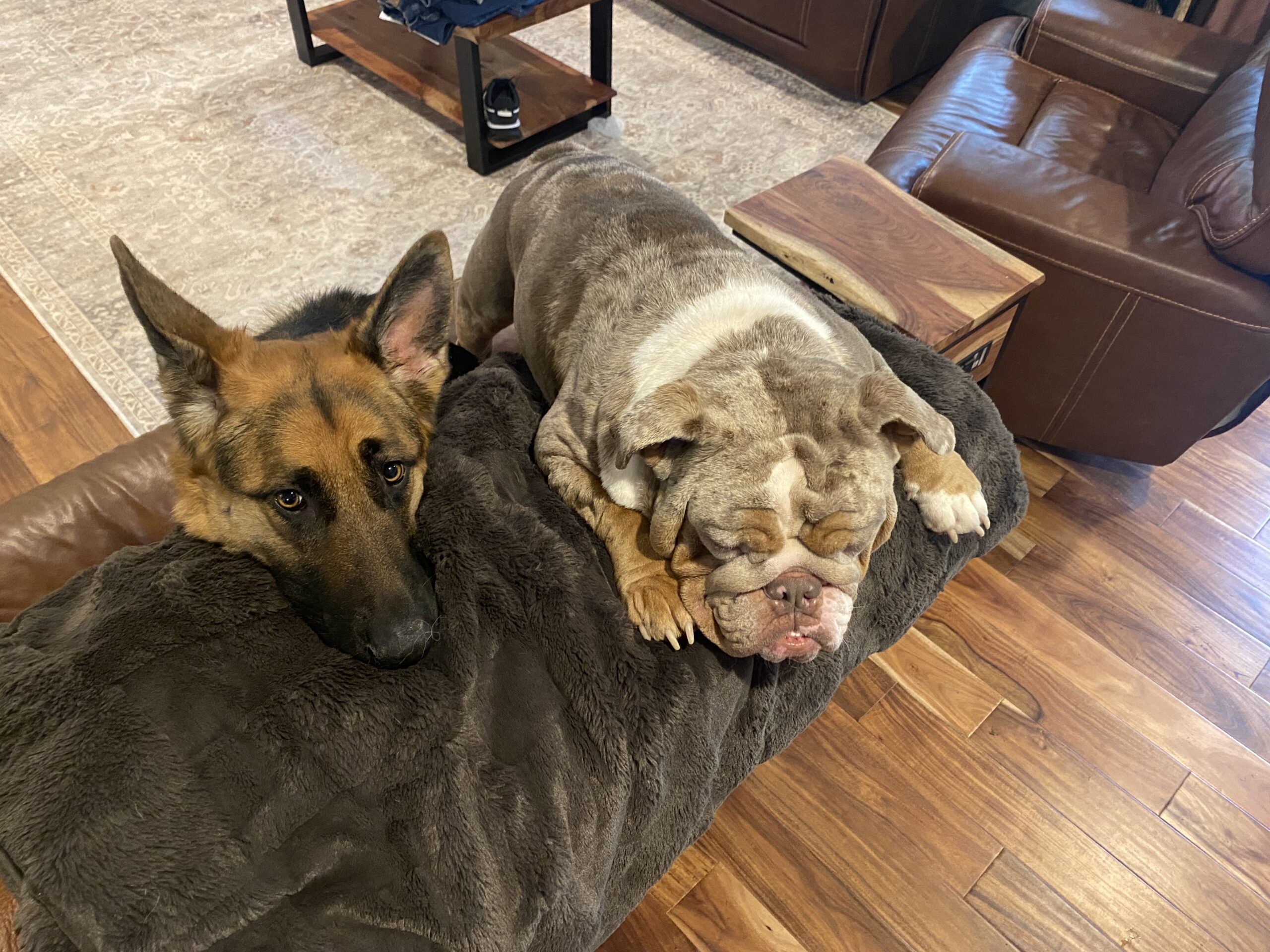
    For context: I have two English Bulldogs and a German Shepherd. The Bulldogs shed a normal amount. The Shepherd sheds enough to re-stuff a couch cushion on a weekly basis. This is not an exaggeration.

    The Grooming Situation Before This

    …and the grooming vac I used!

    Here is what grooming my Shepherd used to look like. I would take her outside, brush her, watch a small fur tornado form around us, come back inside, and then spend the next twenty minutes vacuuming the trail of fur that somehow followed us back through the door anyway. The fur was in the air. It was on my clothes. It was on the dogs who weren’t even being groomed. It was a whole event.

    And grooming appointments — don’t get me started. I love a professional groomer, I really do, but taking three dogs to a grooming salon on any kind of regular schedule requires a level of logistical coordination I do not currently have. We’re talking scheduling, transporting, paying, the whole thing. For three dogs. Multiple times a year.

    So I was brushing her myself and then cleaning up afterward and it felt like I was just moving the fur from one place to another rather than actually removing it from my life. Which, I came to realize, is exactly what I was doing.

    How I Found the Grooming Vac and Was Immediately Suspicious

    I found it the way I find most things — at ten thirty at night, falling down an Amazon rabbit hole, telling myself I was just looking.

    A grooming vacuum. The concept is that you groom your dog and the vacuum captures the fur directly instead of letting it fly everywhere. The brush or attachment connects to a hose that connects to the machine, and the fur goes straight into a bin. In theory, elegant. In practice, I assumed it would either terrify my dogs or just not work that well.

    I ordered it anyway because I was desperate and it had good reviews and also it was ten thirty at night and my judgment was compromised.

    The kit that showed up — the PG100 Plus specifically — comes with eight tools. Eight. An electric clipper, a grooming brush, a deshedding brush, a crevice tool, a cleaning brush, a pet paw trimmer, and a nail grinder. Which, honestly, the nail grinder alone is notable because dog nail maintenance is its own whole stressful chapter in the dog mom experience and I will get to that.

    Dog Grooming Vacuum

    Introducing Three Dogs to a Vacuum Attachment (A Comedy in Three Acts)

    Act one: The Bulldogs.

    I turned the machine on and both Bulldogs looked up from the couch, assessed the situation, determined it was not food and not a threat, and went back to sleep. That was it. That was their entire reaction. I could have vacuumed them directly and I think they would have just accepted it as part of the day. They are very easy and I appreciate them for it.

    Act two: The German Shepherd, session one.

    She let me brush her with the attachment but kept turning around to look at the machine with the expression of someone who is pretty sure something suspicious is happening but can’t prove it yet. She tolerated the whole session but was very pointed about letting me know she was doing me a favor.

    Act three: The German Shepherd, by session four.

    Completely over it. Stands there. Lets it happen. Occasionally sighs in a way that feels performative. We have reached an understanding.

    The adjustment period is real but it goes faster than you’d think. The key is keeping the first few sessions short and letting them sniff the machine while it’s off first. Basic stuff but it actually works.

    The nail grinder was a separate adjustment process entirely and I won’t sugarcoat it — the first attempt was chaotic. But we got there. And not having to make a separate trip to the groomer just for nail trims is genuinely worth the two weeks of convincing it took.

    What Actually Happens When You Use It

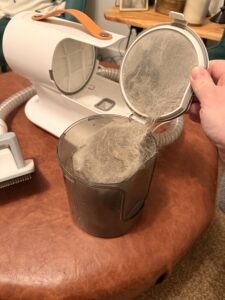
    The first time I used the deshedding attachment on my Shepherd and then opened the bin I genuinely stopped and looked at it for a moment. The amount of fur in there was significant. Not ‘oh that’s a lot’ significant — I mean I showed my husband and his exact words were ‘that came out of the dog?’

    It came out of the dog. It was going to come out of the dog regardless. The difference is that it came out of the dog directly into a sealed bin instead of into the air, onto the floor, into my lungs, and distributed evenly across every soft surface in our home.

    That is the part that changed things for me. It is not that the shedding stopped — the shedding did not stop, the shedding will never stop, I have made peace with that. It’s that the shedding now has somewhere to go that is not my house.

    The 2L bin is large enough to get through a full grooming session on my Shepherd without stopping to empty it. If you’ve ever dealt with a smaller grooming vacuum where you’re stopping every five minutes to clear a clog or empty a tiny container, you understand why bin size matters. The suction is 12,000Pa which is strong enough that I don’t feel like I’m working against the machine — it pulls the loose fur out during brushing rather than just catching what falls.

    I also use the electric clipper for paw fur trimming, which used to require either a very steady hand with scissors or a grooming appointment. The paw trimmer attachment makes it actually manageable at home. My Bulldogs get this done every few weeks now and it takes maybe ten minutes total for both of them.

    The Honest Part Where I Tell You What It Doesn’t Do

    It is not a replacement for your regular vacuum. I want to be clear about that because I think it’s easy to assume that grooming the dog with a vacuum means your floors are covered. They’re not. You still need to vacuum the floors. But here’s what changes — you need to do it less. Because you’re capturing fur at the source during grooming, significantly less of it ends up on your floors to begin with.

    Nervous dogs need time. My Shepherd needed four sessions before she was fully comfortable. If your dog is anxious or reactive, don’t expect them to love it on day one. Give it a few weeks of short sessions.

    And the nail grinder — it works, but dogs have opinions about nail grinding and those opinions are mostly negative until they’re not. Budget some adjustment time there too.

    My honest summary: it does not solve the fact that I have three dogs and one of them is a German Shepherd. Nothing will solve that. What it does is make the fur situation manageable instead of constant, and at this point manageable is everything.

    So Would I Buy It Again

    Yes. Already have — I bought a second one to keep downstairs so I’m not lugging it between floors. Make of that what you will.

    If you have a heavy shedder and you’re spending more time cleaning up after grooming than actually grooming, this is the thing that breaks that cycle. The whole point is to stop the fur before it becomes a whole-house problem and it does that job well.

    If you want to check it out, I’ll link it below. The PG100 Plus is the one I use — it’s the version with all eight tools including the nail grinder and paw trimmer, which is worth having if you’re trying to do as much grooming at home as possible.

    Pet Grooming Vacuum

    And if you’ve tried a grooming vacuum and have thoughts — good, bad, ‘my dog absolutely lost it and we never recovered’ — drop it in the comments. I want to hear everything.

    P.S. — I keep my full Amazon dog supply list updated with everything I recommend. If you found this post helpful, that list is your next stop. →Amazon Pet Must Haves

    — Jessica 🐾

    This post contains affiliate links. Read my full disclosure policy here.

  • I Tried These Vacuums for Pet Hair So You Don’t Have To

    Disclosure: This post contains affiliate links. If you buy something through my links I may earn a small commission at no extra cost to you. I tested everything myself — my opinions are entirely my own and heavily influenced by three dogs who do not care about my sanity.

    I want to be honest with you: I did not plan to own this many vacuums.

    It just sort of happened the way most things happen when you have a German Shepherd and two English Bulldogs — gradually, then all at once. You buy one vacuum, it works okay, then your Shepherd goes through a seasonal shed and you realize ‘okay’ is not going to cut it in this house. You buy another one. That one is better for the stairs but terrible for the kitchen. You end up with a vacuum situation.

    Over the past several months I have worked through five different options trying to figure out what actually pulls its weight in a three-dog household versus what just looks good in Amazon photos. Some of them surprised me. One of them was genuinely a waste of money and I’m going to tell you which one so you don’t make the same mistake. And two of them earned a permanent spot in my actual life, which is the highest praise I can give anything.

    Here’s what I found.

    Quick note on what counts as heavy shedding in my house: my German Shepherd alone produces enough fur in one grooming session to stuff a decorative pillow. I am not exaggerating. This is my baseline.

    The Grooming Vacuum:

    I resisted grooming vacuums for a long time because the whole concept felt like it was designed for dogs who calmly sit still and enjoy being brushed. None of my dogs are those dogs. My German Shepherd is anxious about things that aren’t even real threats, the Bulldogs are unpredictable, and the idea of adding a loud machine into the grooming situation felt like asking for chaos.

    I was half right. My Shepherd needed about three sessions to get comfortable with it — she would let me brush her but kept side-eyeing the vacuum unit like it had personally offended her. By session four she had completely given up caring. The Bulldogs, being Bulldogs, barely acknowledged it existed from day one. They have bigger things to think about, like sleeping.

    Once everyone adjusted, this became the most useful thing I own for managing the shedding situation. And I want to be specific about why, because ‘it picks up fur during grooming’ does not fully capture what it does.

    The difference is about where the fur ends up. Normally when I groom my Shepherd, the loose fur goes into the air and onto every surface within a ten foot radius. I groom the dog and then I have to clean the room. With the grooming vacuum, the fur goes directly from the brush into a 2L bin and it stays there. My floor after a grooming session looks like a floor instead of a fur installation art piece.

    The kit comes with eight different tools. I mostly use the deshedding attachment on my Shepherd and the slicker brush on the Bulldogs. The hose is a reasonable length so you’re not doing an awkward shuffle trying to keep the machine close. The bin is big enough to get through a full session on my Shepherd without stopping to empty it, which was a real issue with a smaller grooming vacuum I tried previously.

    The noise is manageable — not silent, but not so loud it sends everyone running. My Shepherd did the thing where she stood completely still and stared at the ceiling for the first two sessions, which is apparently her way of processing new information.

    Dog Grooming Vacuum Kit

    Is it the only vacuum you need? No. It doesn’t replace floor vacuuming. But it dramatically reduces how often I need to vacuum because I’m capturing fur at the source before it has a chance to settle everywhere. That is worth a lot.

    The Kitchen Floor Thing: EyeVac Pro Touchless Dustpan

    This one I genuinely did not see coming.

    The EyeVac Pro is not technically a vacuum in the way you’re probably picturing. It’s a stationary unit that lives against your wall, plugged in, and when you sweep toward it the sensors automatically turn it on and suck everything up. Fur, crumbs, dirt, whatever — sweep it in the direction of the unit and it disappears. No bending. No dustpan. No that thing where the fur slides back onto the floor the second you move the dustpan.

    I bought it specifically for the kitchen because I sweep my kitchen a minimum of four times a day. Dog hair, food, the mysterious crumbs that appear even when nobody has eaten anything — it is constant. I was spending a genuinely ridiculous amount of time in the sweep-into-dustpan loop and the dustpan was losing.

    What I did not expect was how much mental energy this would free up. It sounds small. Having a thing that just handles the floor debris when you sweep toward it sounds like a minor convenience. But when you do something four times a day and it goes from mildly annoying to completely effortless, it adds up. I genuinely did not realize how much the dustpan situation was bothering me until it wasn’t bothering me anymore.

    My husband walked into the kitchen the first week I had this and asked why I seemed more relaxed. I showed him the EyeVac. He stood there sweeping crumbs into it for about two minutes straight. We are both normal adults.

    The sensors are fast — it activates within a second of anything getting close to the intake. The 1400 watts means it handles pet hair without hesitation, including the clumps. It’s bagless so you just empty the canister. It is corded and stationary, which means it lives in one spot forever, but for a kitchen that’s exactly what I want. I didn’t need it to move. I needed it to be there every single time without me having to do anything.

    EyeVac Pro Touchless Dustpan

    If your main pet hair battleground is a hard floor area you’re cleaning multiple times a day, this is the most low-effort solution I’ve found. It just sits there and waits for you to need it. That is the correct behavior.

    The Other Three — Honest Quick Takes

    I tested three more in this process. Here’s the short version so you can skip the ones that won’t work for your situation.

    The cordless stick vacuum

    Perfectly fine vacuum. Genuinely. For a household with one small dog who sheds a normal amount, this would probably be great. For my house it was underpowered. The bin filled up so fast on my Shepherd’s fur that I was stopping to empty it in the middle of a single room, which defeats the whole point of a quick clean. Not a bad vacuum — just not built for what I’m dealing with.

    A budget handheld

    The car vacuum. That is all it is good for in my life. It does a decent job on car seats for a quick touch-up, but the filter clogged almost immediately when I tried to use it on German Shepherd fur inside the house and had to be cleaned after every single use. I still keep one in the car. I would not try to ask more of it than that.

    The robot vacuum

    The concept is excellent. The reality in my home is that it gets stuck on dog toys every twelve minutes and sends me a distress notification like I am supposed to come rescue it. It also could not handle the fur situation near baseboards, which is exactly where I most need help. I think robot vacuums are genuinely good in homes that are less chaotic than mine. In my home it required more supervision than a toddler and I have a lot going on already.

    I might try a higher-end model at some point. This one I sent back.

    So What Should You Actually Buy

    If I’m being direct: it depends on where your biggest problem is.

    If you have a heavy shedder and the fur-everywhere-after-grooming situation is your main complaint, start with the AIRROBO. Tackle the problem at the source before it becomes a whole-house situation.

    If your hard floors are the daily battle and you’re sweeping the same floor four times a day and losing your mind about it, the EyeVac Pro will change your life more than almost anything else in this price range. I know that sounds like marketing but I mean it literally.

    If you have two Bulldogs and a German Shepherd and live in a house where fur is less of a problem and more of a permanent condition — you probably need both. I say that with full self-awareness. I have both. I regret nothing.

    The honest test I use for any pet hair product: does it actually do the thing, or does it just make me feel like I’m doing something? These two passed. The other three, in my house, did not.

    If you’ve tried a vacuum that completely changed things for you and I didn’t cover it here, drop it in the comments. I am always interested in field reports from people who are also in the trenches. And if you have a shedding situation that seems genuinely unsolvable, same — I’ve seen a lot at this point and I probably have thoughts.

    Save this post for later and grab whatever makes the most sense for where you’re starting. You don’t have to do all of it at once — but once you start, you’ll wish you had done it sooner. Want the full list? I rounded up every dog product I actually use and love in one place on Amazon. No fluff, just the stuff that works. → Shop my List

    — Jessica

    Products mentioned:

    AIRROBO PG100 Plus Dog Grooming Vacuum & Kit

    EyeVac Pro Touchless Automatic Dustpan

    This post contains affiliate links. Read my full disclosure policy here.

  • The Pet Hair Problem Nobody Talks


    The Pet Hair Problem Nobody Talks About — The Pet Hair Warrior
    The Pet Hair Warrior

    Real Talk

    The Pet Hair Problem Nobody Talks About — Clothes, Cars, and Guests Who Judge You

    We all know about the couch. But the fur goes so much further than that.

    By Jessica·March 2026·5 min read

    Heads up: This post contains affiliate links. If you buy something through my links, I may earn a small commission at no extra cost to you. I only recommend products I actually use and believe in — my dogs make sure of that whether I like it or not.

    Nobody warned me that becoming a dog mom meant also becoming intimately familiar with fur. Not just on the couch — everywhere. My clothes, my car, the one jacket I specifically tried to protect, the fruit bowl somehow, and yes, the guest bathroom that I cleaned twenty minutes before company arrived.

    The internet is full of advice about keeping your furniture clean. Great! Helpful! But I feel like we don’t talk enough about the other places pet hair shows up and quietly ruins your life. The places that catch you off guard. The places that make your mother-in-law raise an eyebrow without saying a word.

    I have three dogs. Two English Bulldogs who contribute a truly unreasonable amount of shed for animals that look like they’re barely trying, and one German Shepherd who treats hair loss like a full-time hobby. I’ve tried a lot of things. I’ve also accepted that some amount of fur is just… my lifestyle now. But there are a few tools that have genuinely changed how I deal with the problem — and I want to talk about the spots people forget.


    The Clothes Situation

    Let’s start here because this is the one that gets me every single time. You’re dressed. You look great. You’re about to walk out the door. And then one of your dogs looks at you with those eyes and you make the mistake of giving them a quick pat and suddenly you are wearing a fur coat you did not purchase.

    I’ve made peace with the fact that black clothing is more of a suggestion than a reality in this house. But what I haven’t made peace with is showing up somewhere looking like I rolled around in a dog bed before leaving. (Even when I did.)

    The one I reach for every single morning

    ChomChom Roller Pet Hair Remover

    I was skeptical of the ChomChom because I’d tried approximately forty lint rollers before it and none of them did what they promised. This one is different. It’s reusable — no tape, no refills — and it works by rolling back and forth to catch the fur in a little chamber. It takes about fifteen seconds on a pair of black pants and they actually look clean. I keep one in the kitchen, one in my car, and one at my desk because at this point it’s basically a utility item like keys or a phone charger.→ Find it on Amazon


    The Car

    If you take your dogs anywhere — the vet, the park, a drive-through where they get puppuccinos because you’re that person — your car is suffering. The back seat, the floor mats, the crevices between seats that seem specifically designed to trap fur forever.

    I used to use a regular vacuum on my car and it helped, sort of, but it never got the fur that was really woven into the fabric. You know what I mean. The fur that doesn’t lift, it just smooshes around. That fur.

    “The back seat of my car looked like the inside of a dog. That is the most accurate way I can describe it. I needed something that actually pulled the fur out instead of just redistributing it.”

    Game changer for car interiors

    Pet Hair Rubber Broom

    This is the product I wish someone had told me about years ago. It’s a carpet broom with an adjustable handle, and the rubber teeth do something a vacuum just can’t — they actually grab the fur that’s embedded in fabric and pull it up to the surface so you can collect it. I use it on my car seats before I vacuum and the difference is genuinely embarrassing. Like, I didn’t realize how much fur was in there until I saw what came out. It also works on rugs, mats, and the couch. One tool, a lot of problems solved.→ Find it on Amazon


    The “Company Is Coming” Panic

    You know this feeling. Someone is coming over in thirty minutes and you walk through your house and truly see it — possibly for the first time in days — and you realize the fur situation has gotten away from you. Again.

    I’m not going to pretend I have a perfect system. I have three dogs and a full life and sometimes things get ahead of me. What I do have is a fast routine that makes the most visible difference in the least amount of time, and both products above are part of it.

    The carpet rake on the rugs first — two or three passes and you’re pulling up fur you didn’t even know was there. Then a quick pass with the ChomChom on the couch cushions and any throw pillows. Then I light a candle and pretend this is how it always looks. Works every time.


    The Stuff Nobody Mentions

    Here are a few honorable mentions that don’t get enough airtime:

    The guest bathroom. You clean it. You think you got everything. Your guest finds a dog hair on the hand towel. I have no solution for this one. I just wanted you to know you’re not alone.

    Your work bag. If it sits on the floor near a dog at any point, it has fur on it. The ChomChom handles this fine.

    Bedding. If your dogs sleep with you — or near you, or have ever been within ten feet of your bed — your bedding needs attention. This Hair Dissolver in your wash will save your washing machine and your sanity.

    The entryway. The first thing guests see. Fur tumbleweeds gather there fast. A quick rake before anyone arrives is thirty seconds of effort that makes a big impression.


    The honest truth is that living with dogs means living with some level of fur, always. I’ve made peace with that. What I refuse to make peace with is being completely blindsided by it in places I wasn’t paying attention to.

    If you’ve got a spot that gives you trouble that I didn’t mention — or a product that’s changed your life and I need to know about — I genuinely want to hear it. Drop it in the comments or send me a message. We’re all in this together, and by “this” I mean a cloud of dog hair.

    Want the full list? I rounded up every dog product I actually use and love in one place on Amazon. No fluff, just the stuff that works. → Shop my List

    🐾

    Jessica — The Pet Hair Warrior

    Dog mom to 2 English Bulldogs and 1 German Shepherd who has never once slowed down.